A sourced guide to the Gaudiya Vaishnava tradition
Bhakti Atlas is an independent publication about the devotional movement that grew around Chaitanya (1486–1534) in Bengal and Orissa: the people who shaped it, the towns and festivals it is tied to, the texts it reads and the songs it sings. We write as outsiders to any temple or mission, cite our sources, and keep quotations short.
Start here
 Places
Jagannath Puri
The temple, its gates and festivals, and the town's places linked to Chaitanya.
 Texts
Who is a Vaishnava?
The texts a Gaudiya anthology gathers on the grades and qualities of devotees.
 Texts
Bhakti-rasamrita-sindhu
How Rupa Gosvami turned the theory of rasa into a map of devotion.
 Places
Vraja-mandala parikrama
Twelve forests, a sacred hill and a month on foot around Vrindavan.
Sections
- PeopleThe teachers, poets and reformers of the Gaudiya Vaishnava tradition, from the sixteenth-century Gosvamis of Vrindavan to the twentieth-century founders of missions in India and abroad.
- PlacesPilgrimage towns and festivals: Jagannath Puri and its chariot festival, Navadvipa, and the circuit of groves, hills and ponds around Vrindavan known as Vraja-mandala.
- TextsThe scriptures and treatises the tradition reads most closely: the Bhagavad-gita, the Bhagavata Purana, the Brahma-samhita, Rupa Gosvami's works on devotion and later verse anthologies.
- MusicBhajan and kirtan in the Bengali devotional repertoire: who wrote the songs, how they are sung, and the singers who carried them to new audiences.
- Modern eraTwentieth- and twenty-first-century history: institutional splits, the movement's encounters with Western musicians, and disputes over land and religious freedom.
What the tradition is, in brief
Gaudiya Vaishnavism takes its name from Gauda, an old name for Bengal. Its followers worship Krishna, together with Radha, as the highest form of God, and regard Chaitanya as Krishna himself appearing as a devotee. Its central practice is bhakti, loving devotion, expressed above all through congregational singing of divine names (kirtan). In the sixteenth century a group of scholars settled in Vrindavan, remembered as the Six Gosvamis, gave the movement a Sanskrit theology and a ritual and aesthetic literature. In the nineteenth and twentieth centuries reformers in Calcutta reorganised it, and missions carried it to Europe, the Americas and beyond.
That history is shared by many institutions that today disagree about succession, practice and property. This site belongs to none of them. Where accounts differ, we say so and point to the evidence.
Recently added
- The Six Gosvamis of Vrindavan
Rupa, Sanatana, Jiva, Gopala Bhatta, Raghunatha Bhatta and Raghunatha Dasa: the six scholars and ascetics who settled in Vrindavan in the sixteenth century, wrote the theology of the Gaudiya tradition and helped turn the town into a pilgrimage centre.
- Chaitanya (1486–1534): life, sources and legacy
Chaitanya, the Bengali saint at the origin of Gaudiya Vaishnavism: his life in Navadvipa, his renunciation and travels, his eighteen years in Puri, the biographies that tell his story, his teaching on the holy name and what historians can say about him.
- Who is a Vaishnava? The Vaishnava-tattva chapter of the Gaudiya Kanthahara
The Gaudiya Kanthahara is a twentieth-century anthology of Sanskrit and Bengali verses. Its third chapter gathers the classic texts on who counts as a Vaishnava, the grades of devotees and the qualities expected of them.
- Vraja-mandala parikrama: the pilgrim circuit of Krishna's land
The circumambulation of Vraja, the region around Mathura and Vrindavan linked with Krishna's childhood: its twelve forests, Govardhan Hill and Radha-kunda, its sixteenth-century rediscovery, the seasons when it is walked and the guidebooks pilgrims use.
- Vishnujana Swami and the bhajans he sang
Vishnujana Swami (1948–1976) was an American kirtan leader of the early Hare Krishna movement. A short sourced profile and a guide to the Bengali and Sanskrit songs of his recorded repertoire, with their authors and sources.
- The Buddha as an avatar of Vishnu
How the Buddha came to be listed among the avatars of Vishnu in the Puranas and in Jayadeva's Gita Govinda, how Vaishnava and Gaudiya authors explained his role, and how Buddhists and historians see the idea.
- The Brahma-samhita: a South Indian hymn at the heart of Gaudiya theology
The fifth chapter of the Brahma-samhita, a Sanskrit hymn to Krishna as Govinda, was found by Chaitanya in a temple in Kerala's far south. Its content, its refrain, Jiva Gosvami's commentary and the 1932 English translation.
- The Bhagavad-gita in the Gaudiya tradition
The Bhagavad-gita is read across Hinduism. How Gaudiya Vaishnava commentators from Vishvanatha Chakravarti to the twentieth century interpreted it, which verses they treated as its core, and the main editions they produced.
- Shri Rupa-manjari-pada: Narottama Dasa's song of the handmaid
A Bengali song by Narottama Dasa Thakura that addresses Rupa Manjari, the handmaid of Radha identified with Rupa Gosvami. Its themes, its place in the rupanuga tradition, how it is sung and how twentieth-century teachers explained it.
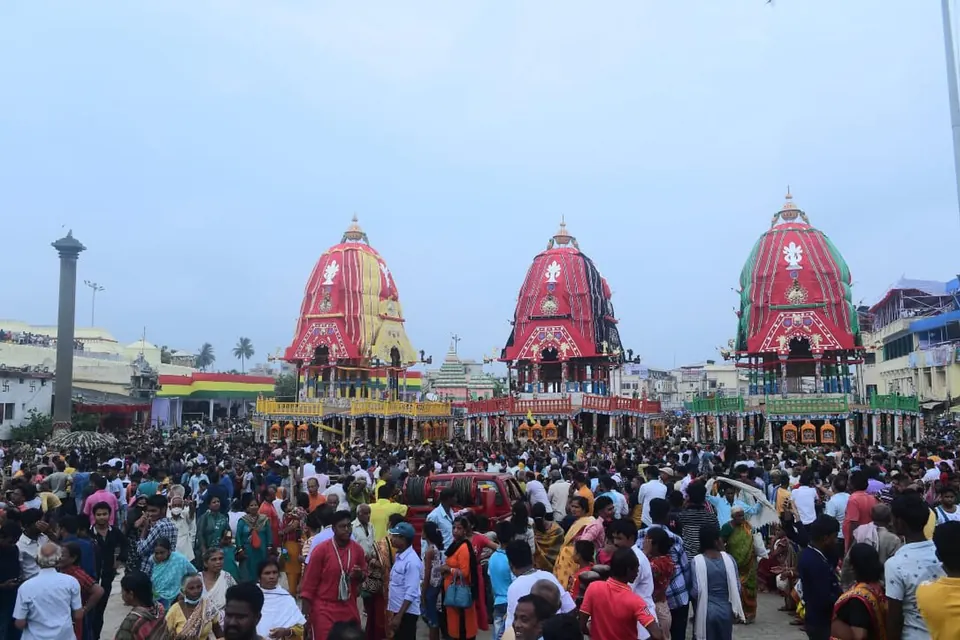
- Ratha-yatra: the chariot festival of Jagannath
How the Ratha-yatra of Puri works, from the building of three new chariots each year to the procession to the Gundicha temple and the return journey, and how the festival spread to cities around the world.

Bhakti Atlas does not host scriptures, translations, recordings or photographs belonging to others. Where a text or a recording is discussed, we describe it and point to published editions. How we work.